Directing a Campaign in the World’s Youngest Country
What happened when an international brand met a production where almost nothing went to plan?
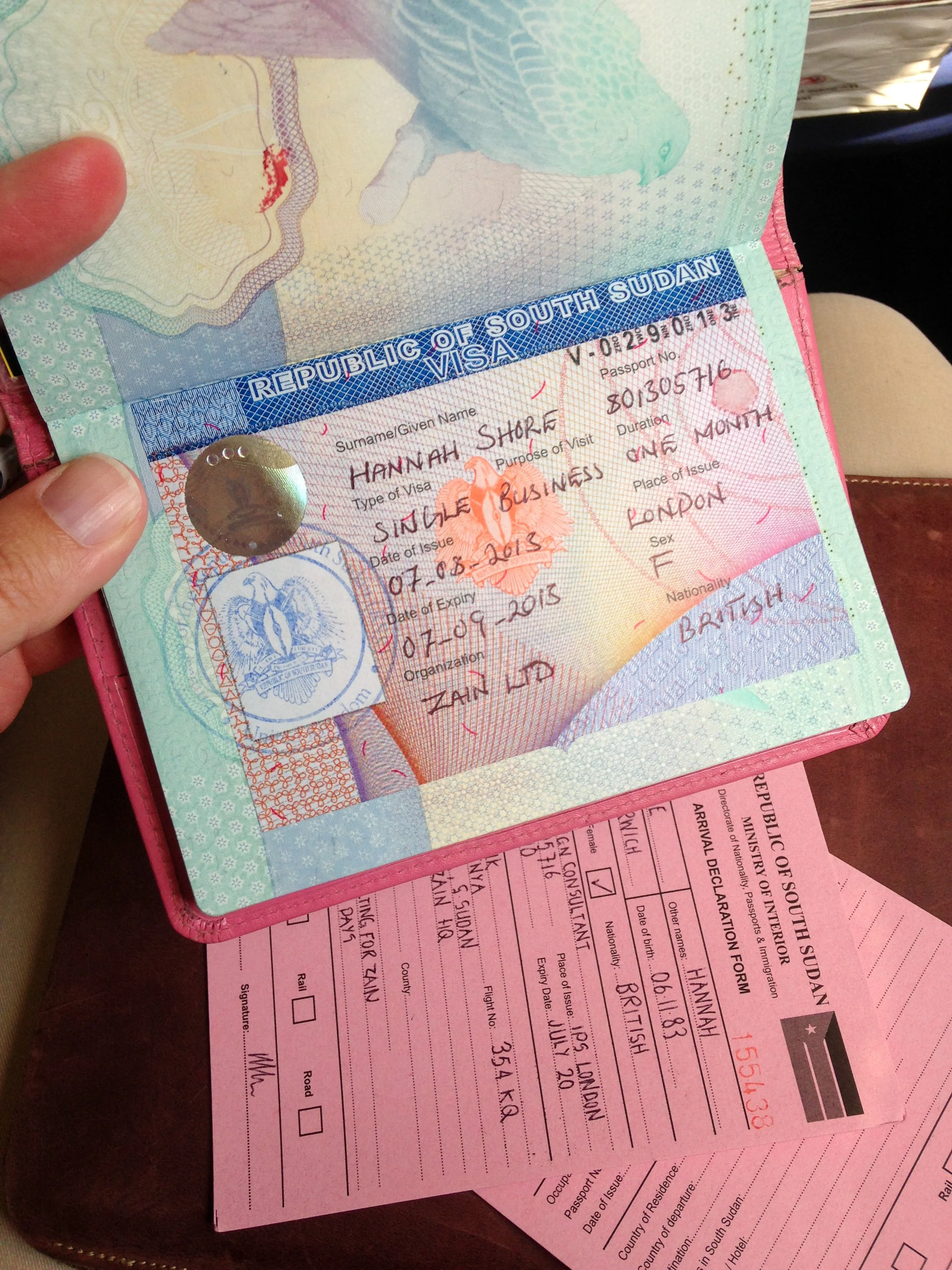
In August 2013, I travelled to Juba via Nairobi to direct a campaign for Zain South Sudan, the country's leading telecommunications operator.
South Sudan had gained independence from Sudan just two years earlier, on 9 July 2011, becoming the world's youngest country. When I arrived in Juba, I wasn't just directing an advertising campaign. I was creating one of the country's first.
At the time, South Sudan wasn’t a tourist destination. Hotels catered to aid workers and diplomats, and there was little infrastructure for outsiders.
But I’d done plenty of shoots… what could go wrong?
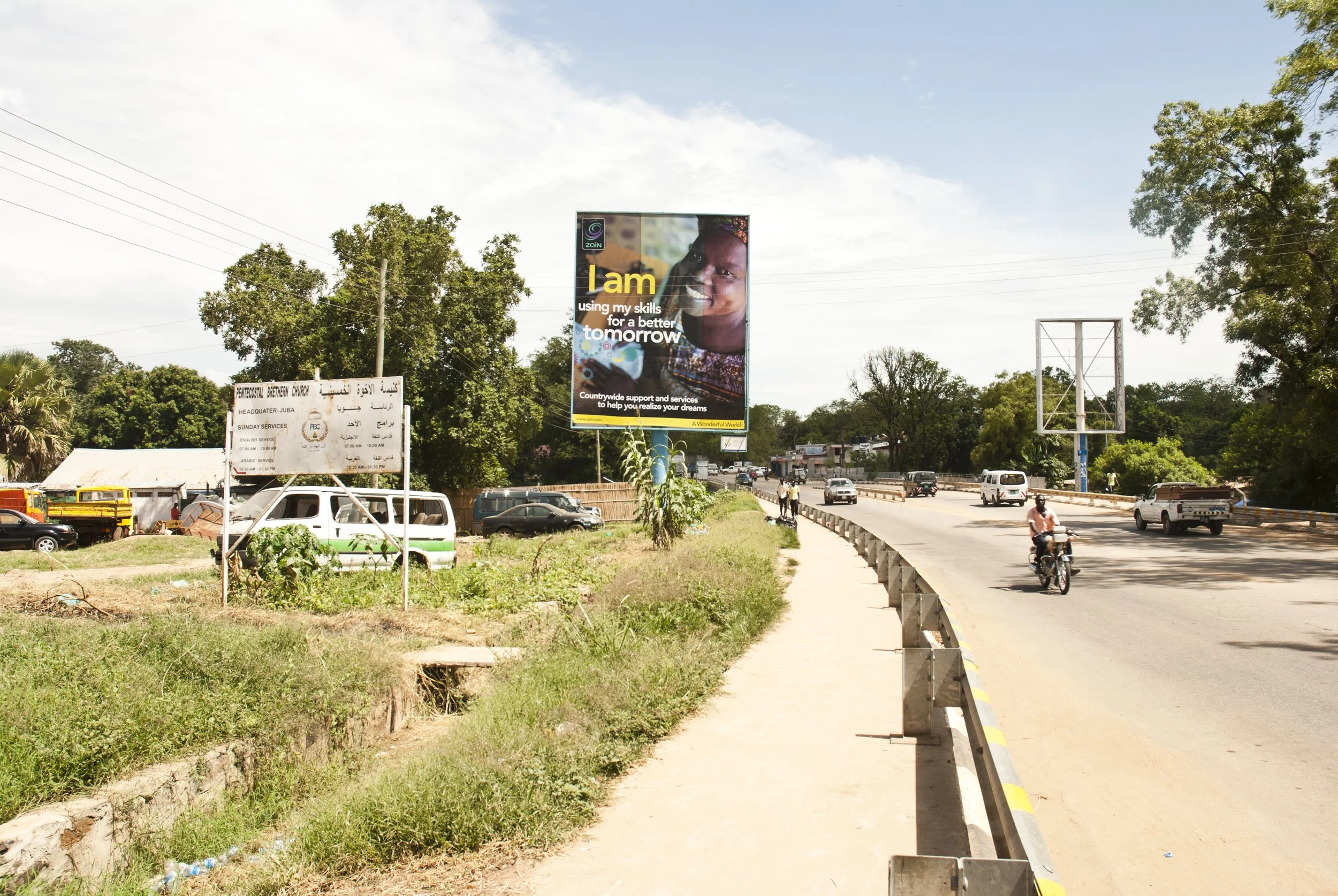
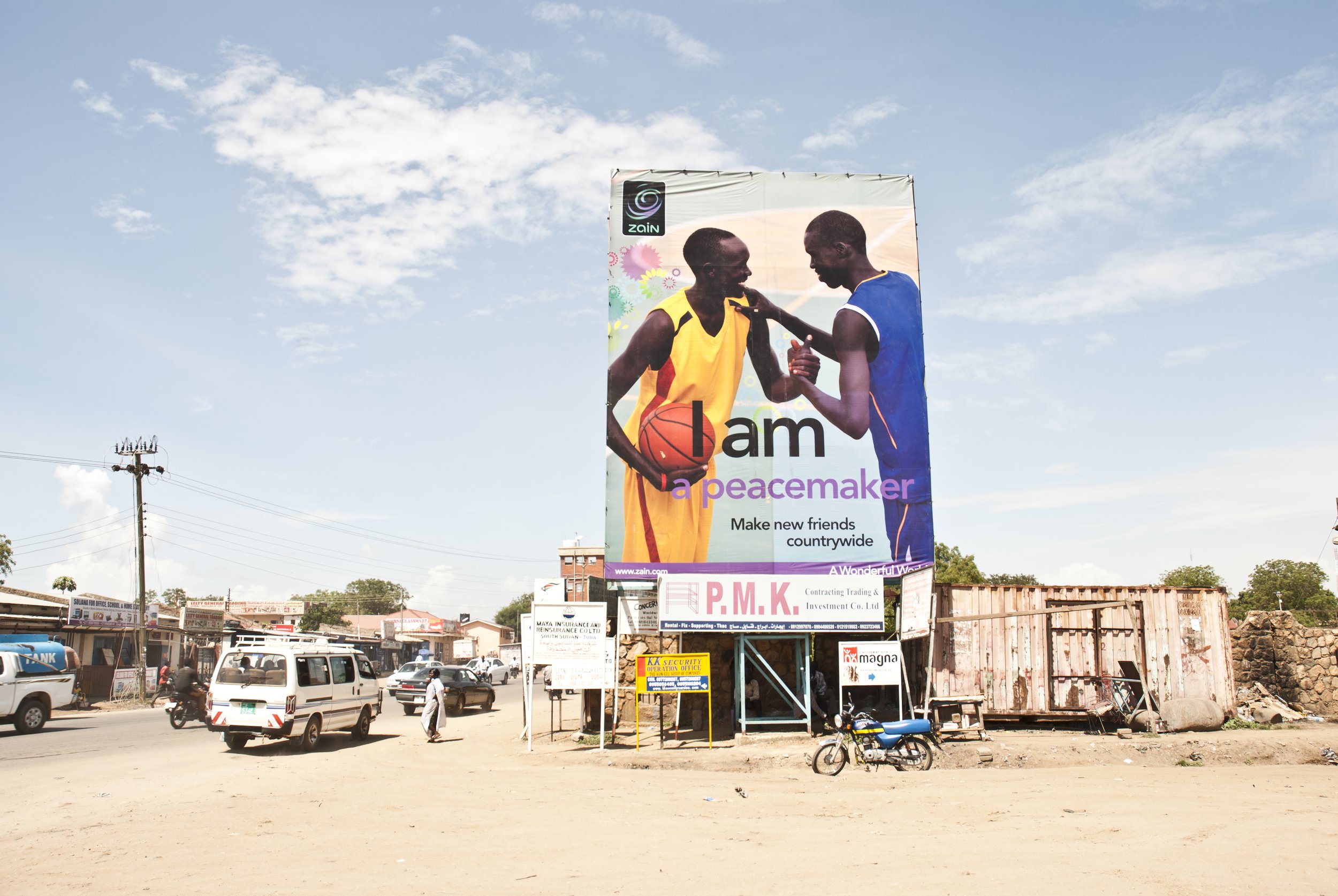
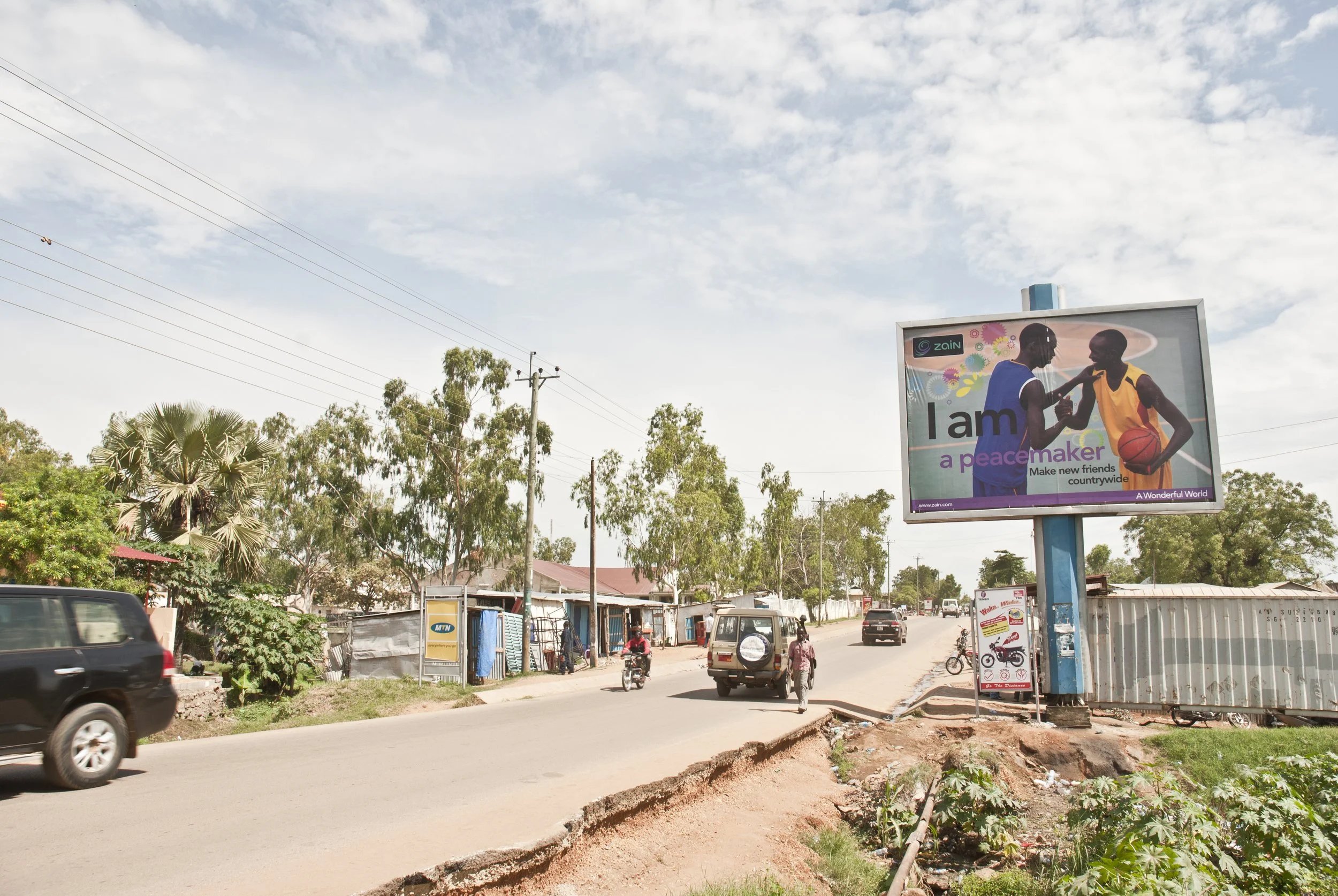
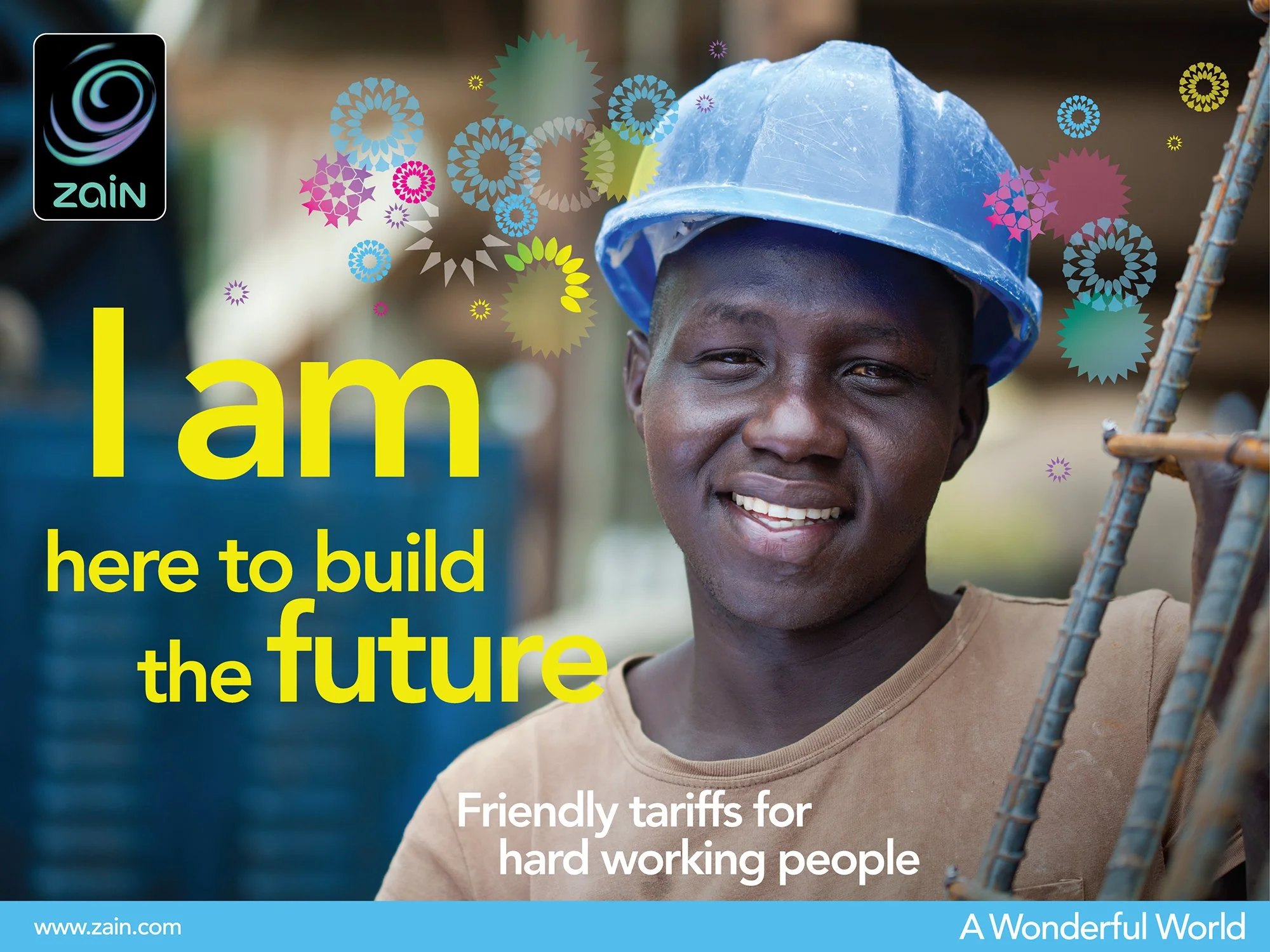
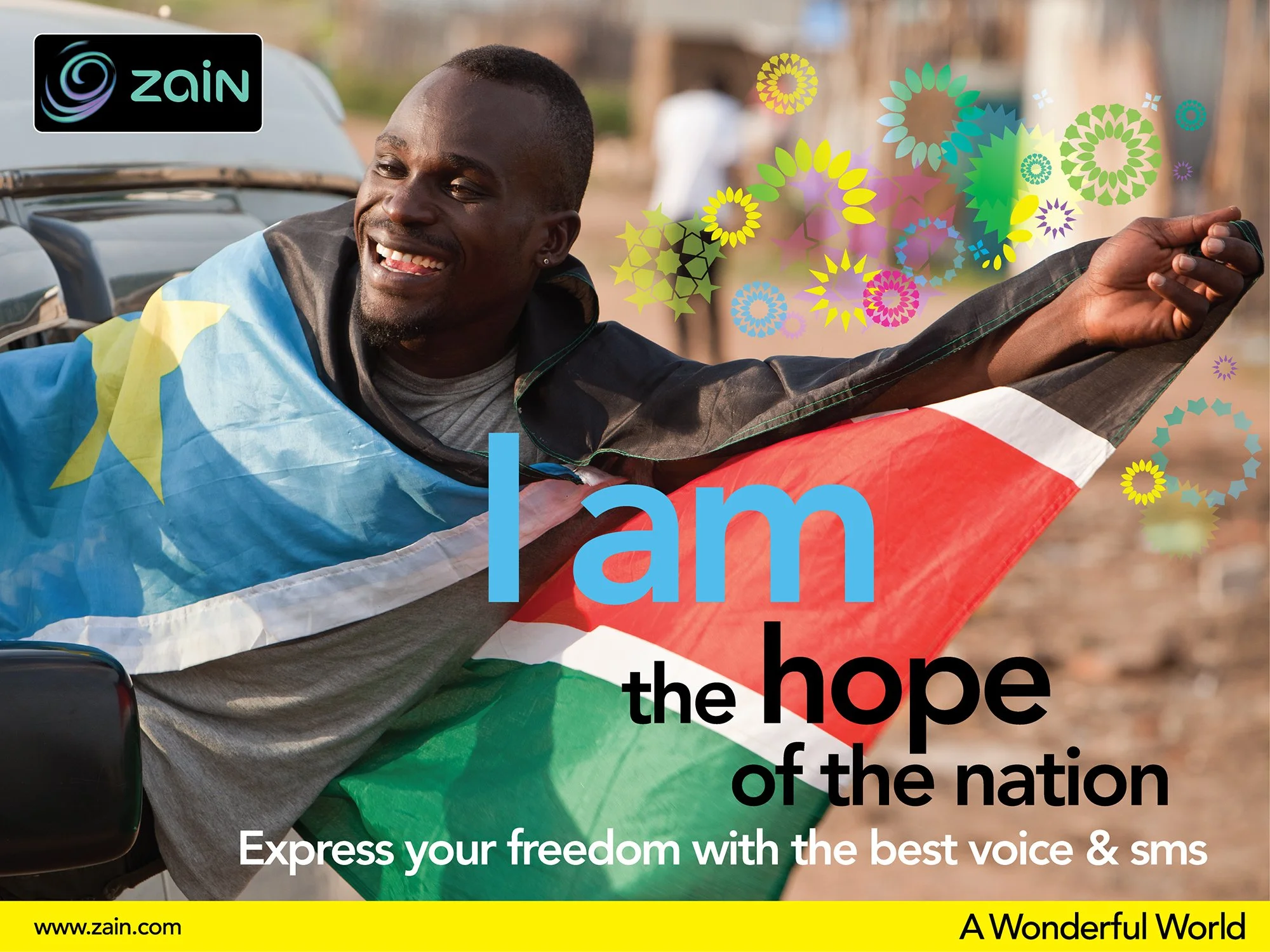
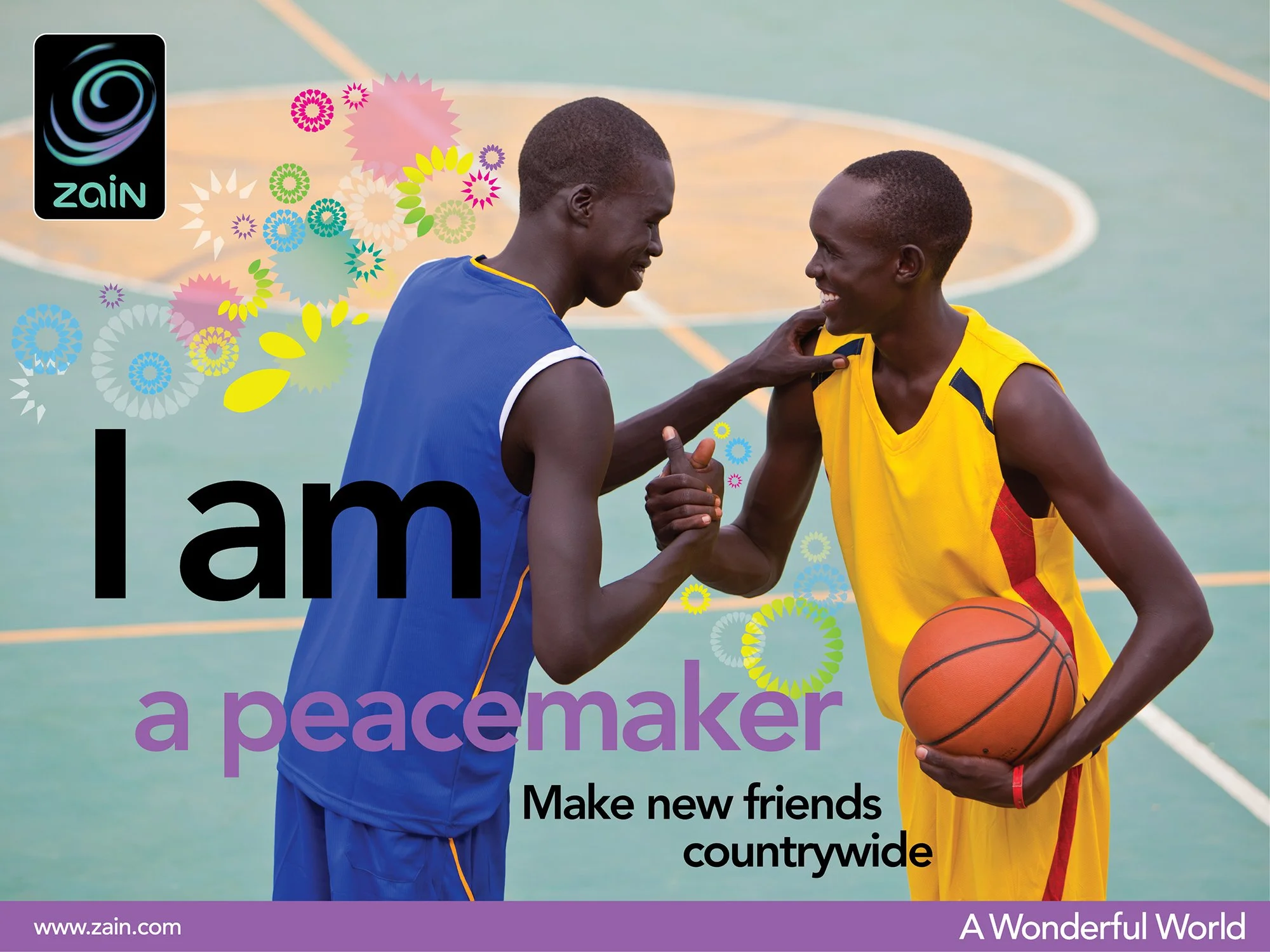
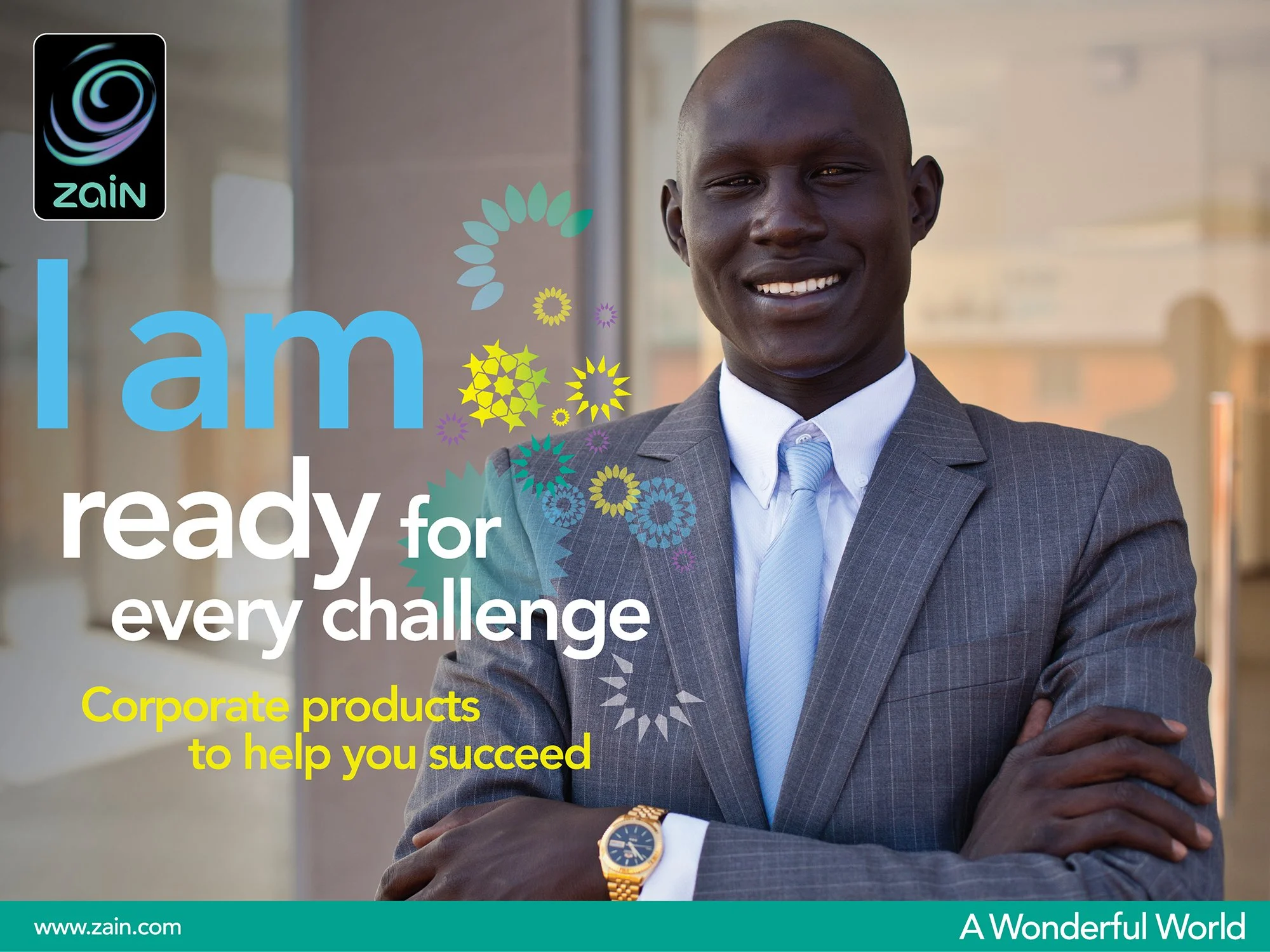
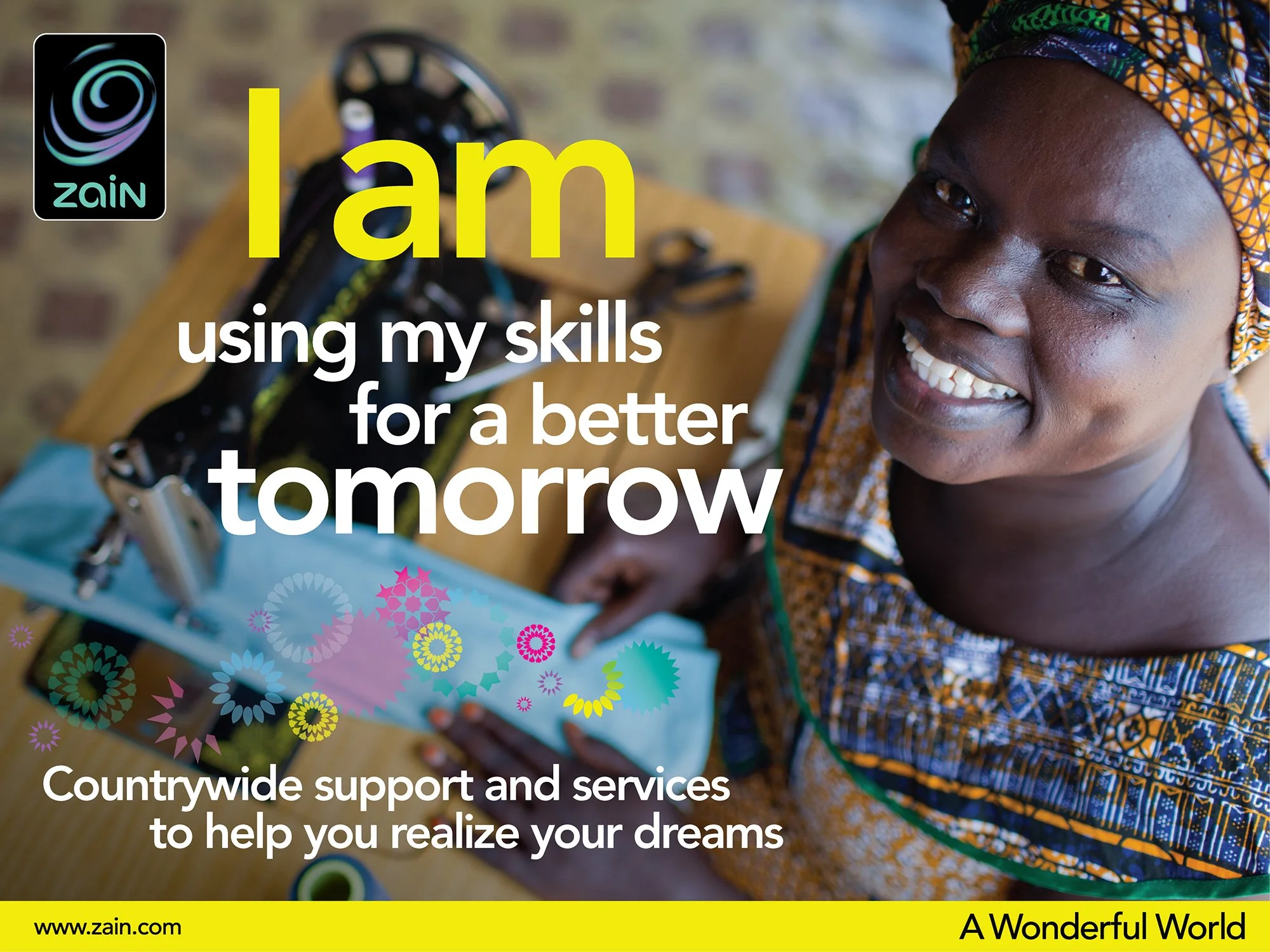
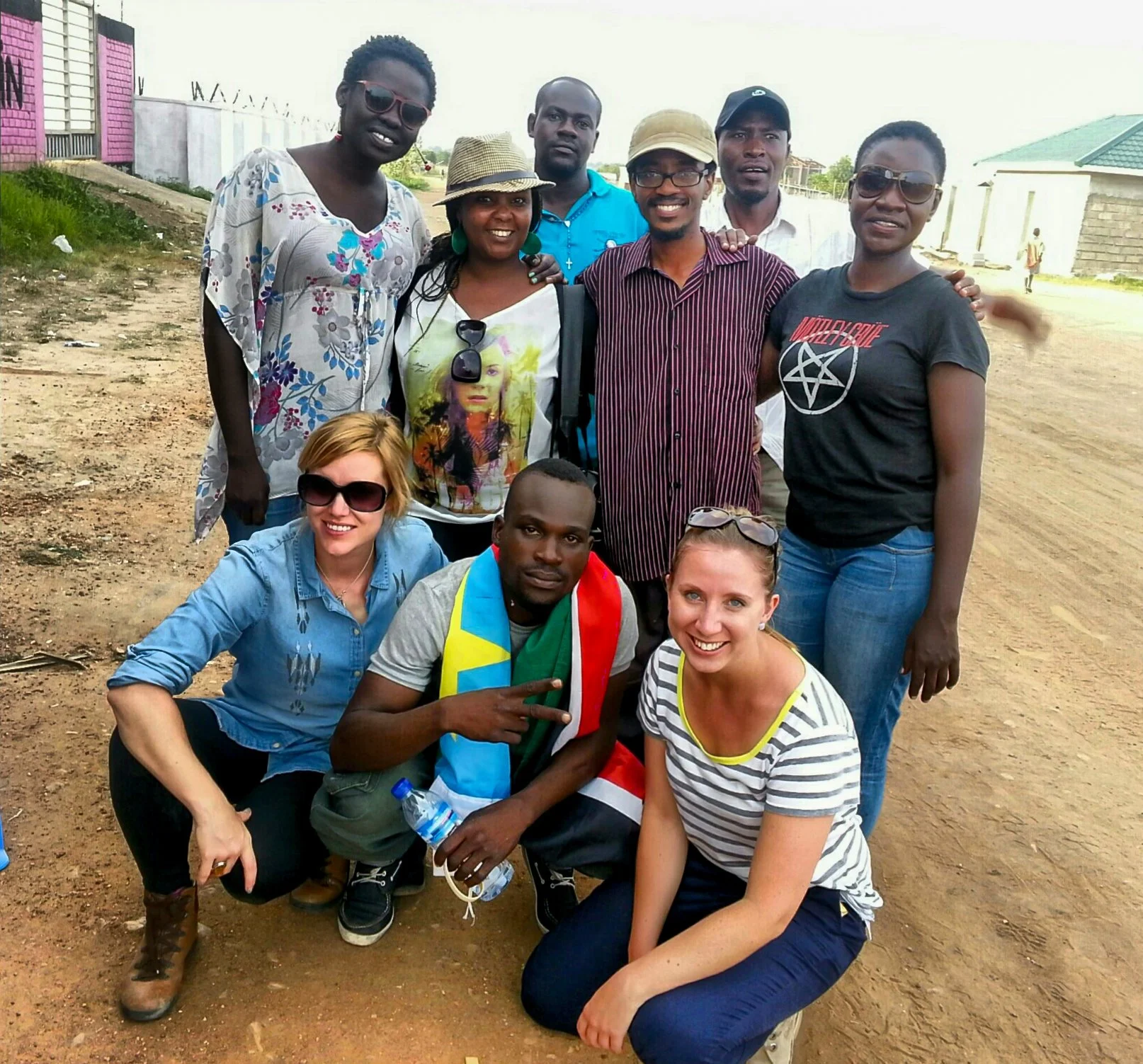
We were creating the I Am campaign for Zain South Sudan. It was to celebrate the people, aspirations and possibilities of this new nation. We had three days to shoot ten environmental portraits, casting real people across Juba, the country's capital, as we went. Kay Lockett, the photographer, was a friend of mine. We flew out together for the shoot, joined by our Kenyan production team and the South Sudanese crew supporting us on the ground.
The idea was about bringing people together across this young, newly independent country. But it was coming from Zain, a major Middle Eastern teleco, so it also had to meet the standards of an established international brand.
The reality of producing work to that standard on the ground was rather different.
There was no traditional casting. And we had just one day before the shoot to find the people we needed.
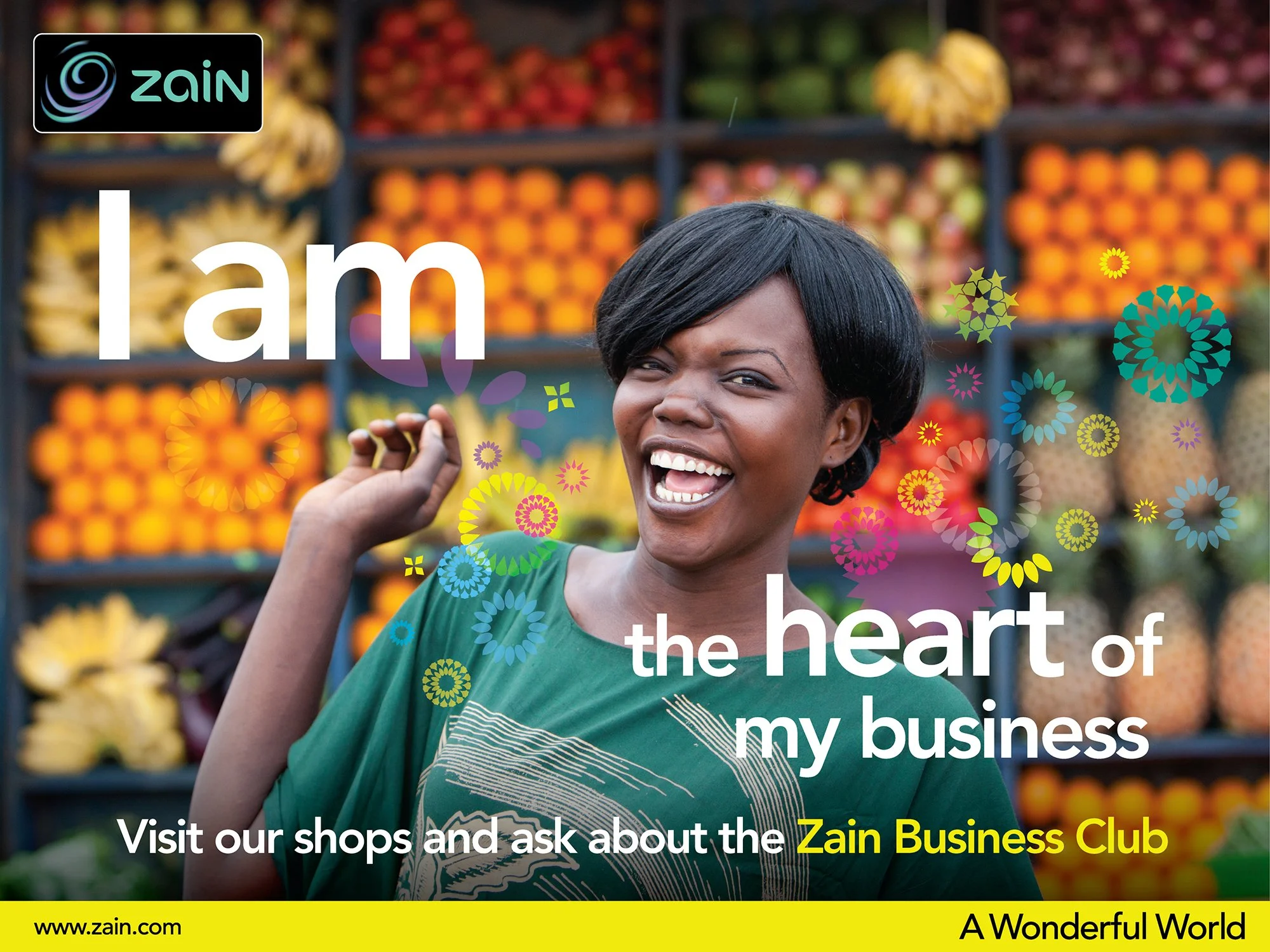
We found a young woman running a fruit and veg stall on the corner of a crossroads. She had the smile we were looking for. She was cast for our headline, 'I am the heart of my business’. Her produce was sparse, so we bought fruit and veg ourselves to fill out her wooden shelves.
The following morning, we were back at her stall by 5am.
It was pitch black. Pouring with rain. The pre-purchased fruit and veg had gone missing. And the crew were nowhere to be seen. Our model was still asleep.
Not the most promising of starts.
The crew were frantically trying to get access to the fruit and veg props, stored ‘safely’ in a locked cupboard in the hotel. Only no one had told the hotel how early we’d need them. We were so tight on time, we were working every waking hour just to get the shots done. Being so close to the equator meant we had a precise 12-hour window of daylight, with no room to push later into the evening.
When the produce arrived, I stood in the rain, stocking the little kiosk into a colourfully abundant fruit and veg stall, the backdrop to her portrait. With the sun finally rising, and everything in place, I briefed the team.
Right on cue, as I turned my back, a goat walked into the set and nonchalantly ate a banana.
You couldn't make it up.
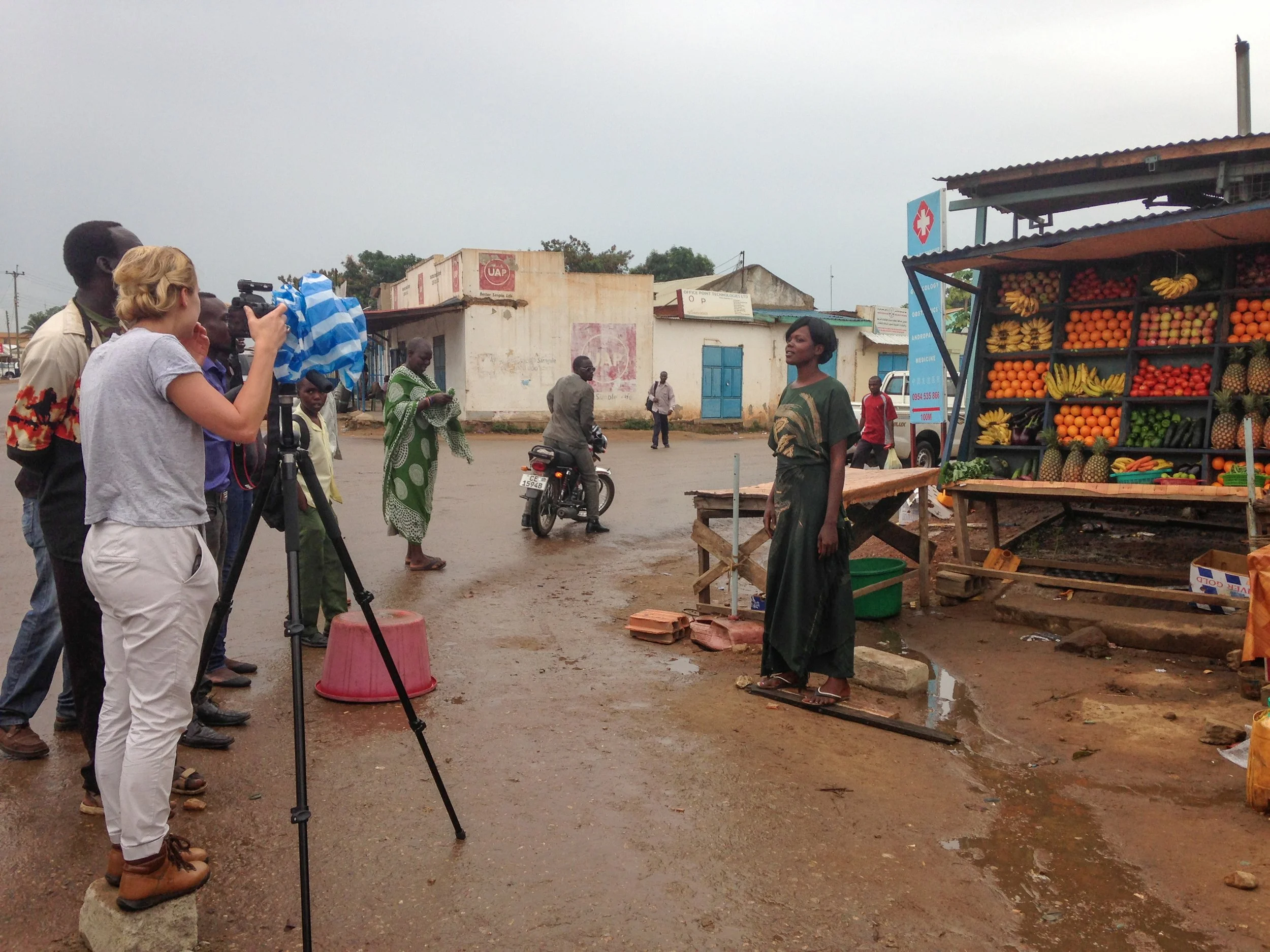
A downpour, a goat and a breakfast fire
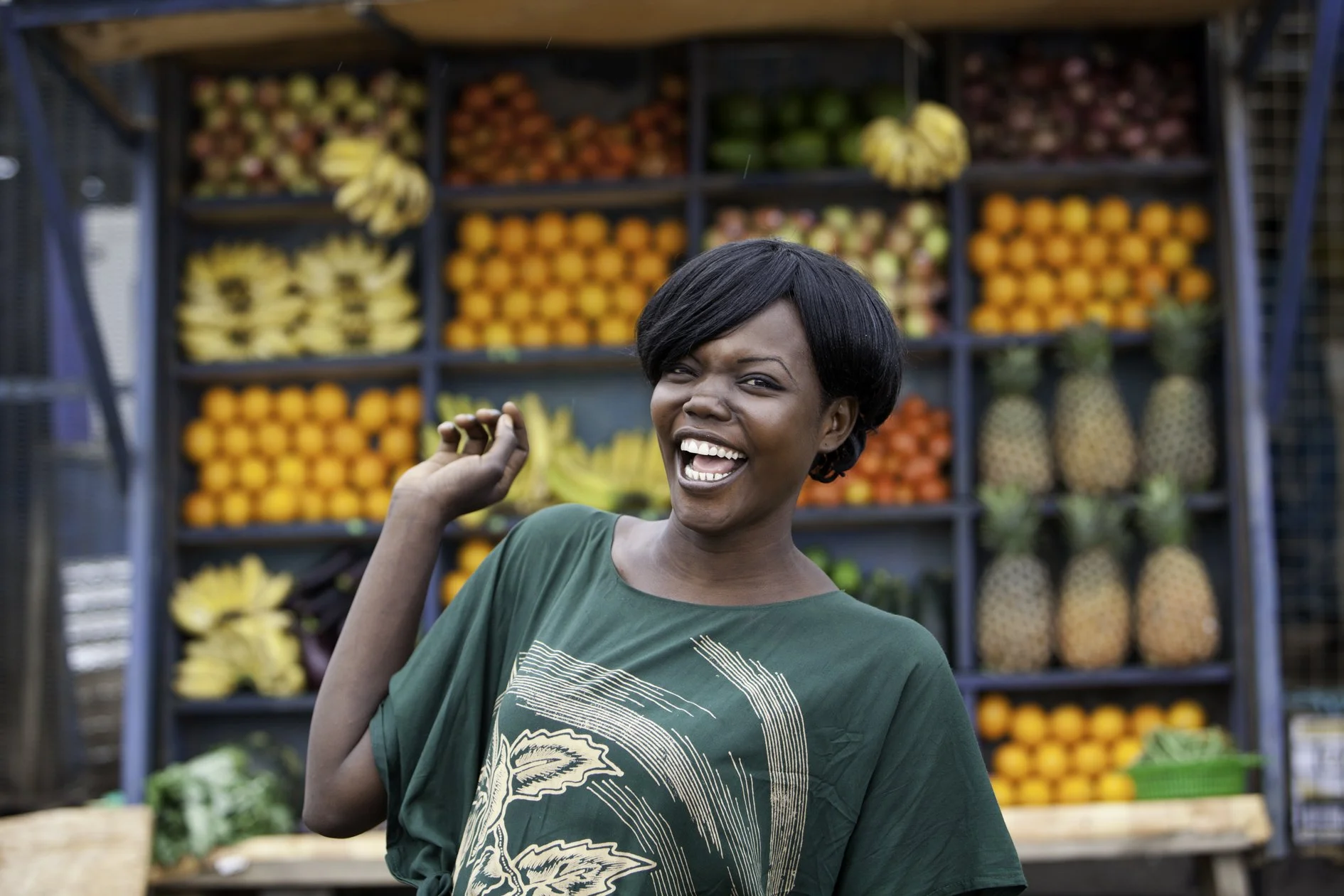
‘I am the heart of my business’ - Photo: Kay Lockett
The rain continued throughout the shoot. It was hot and humid, and keeping the equipment dry was a nightmare. Kay was shooting with her gear wrapped in a striped plastic grocery bag from the stall in a bid to keep the water out. And, with the crew and equipment taking over a large part of one of Juba’s busiest crossroads, we were gathering spectators.
At one point, I thought the humidity was creating a haze on the images. It turned out a local resident had started a fire behind our scene and was cooking breakfast.
This wasn’t in the plan.
Like most of what happened during the week.
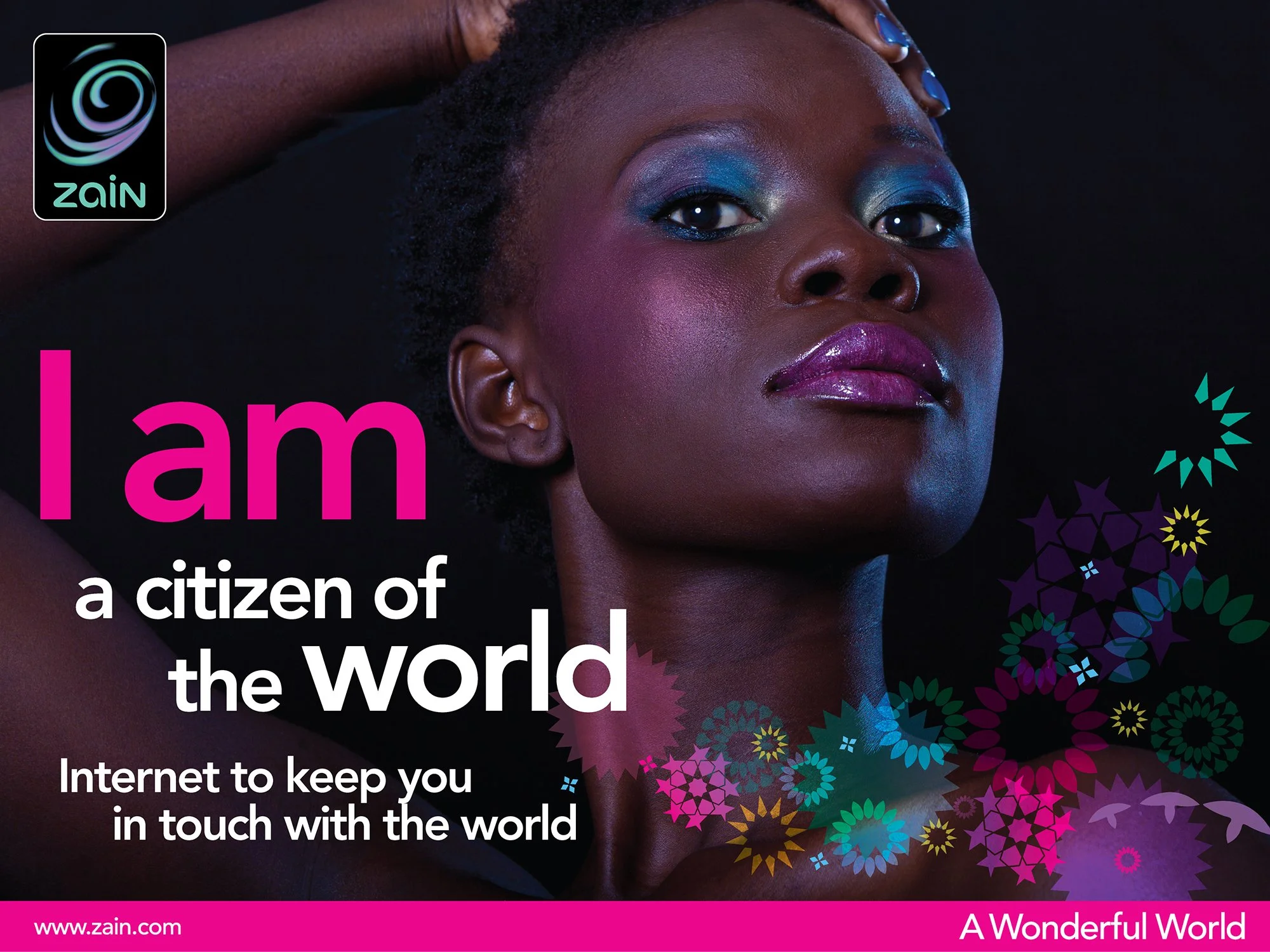
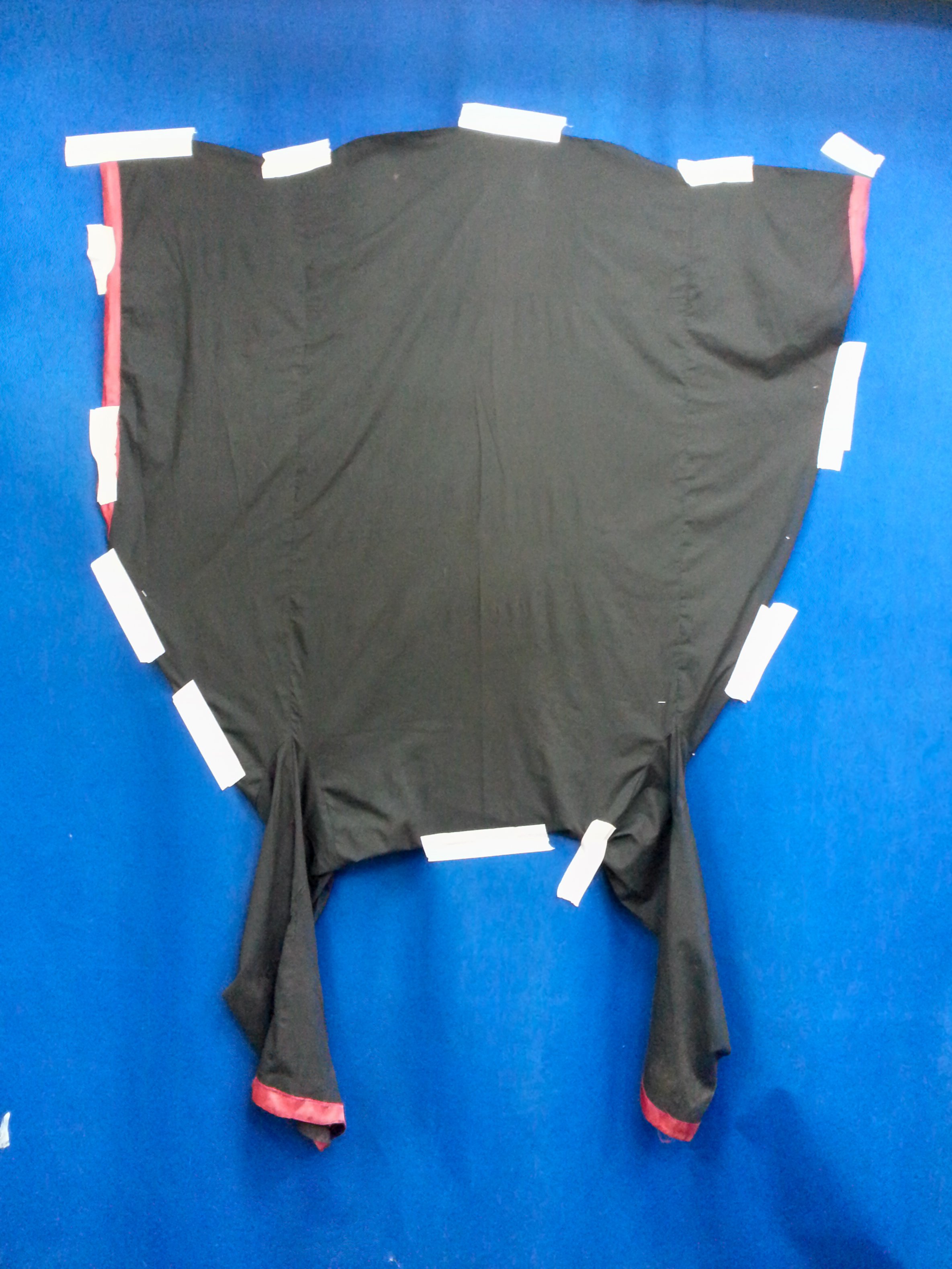
We were shooting a South Sudanese model in a studio, staged like a fashion shoot. Only the studio was little more than a spare room, the lighting had no bulbs, and the only backdrop was a ripped royal blue paper roll that had seen much better days.
The only black cloth we could get our hands on was a graduation cape. So we taped it to the wall. The photographer created a makeshift lighting rig and worked her magic. All whilst she hopped around desperate for the toilet (there wasn’t one for miles).
When you compare the setup to the result, you can see the amount of ingenuity that came from the team to produce what we did. What isn’t so obvious are the moments when I genuinely wondered how we were going to pull it off.
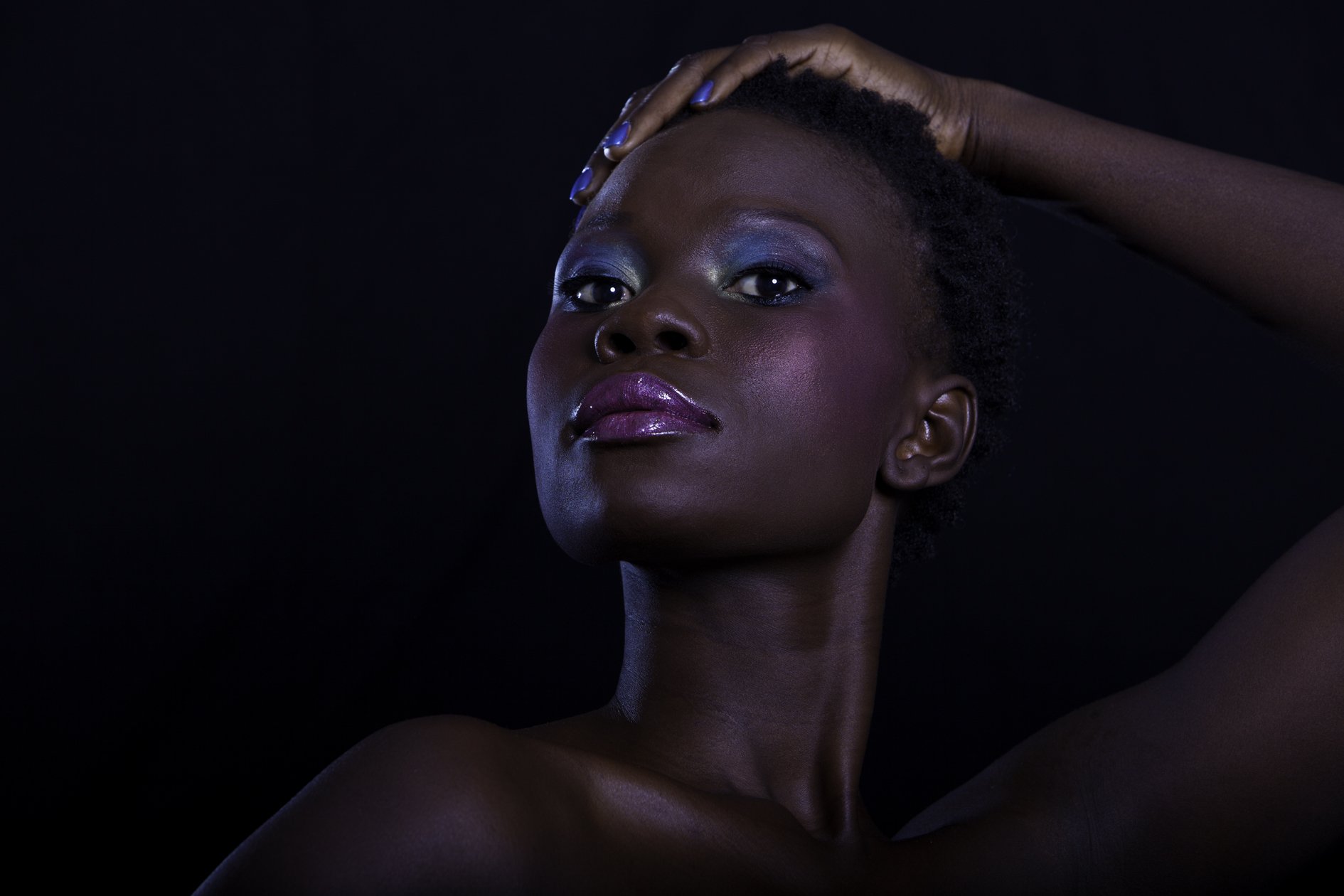
‘I am a citizen of the world’ - Photo: Kay Lockett
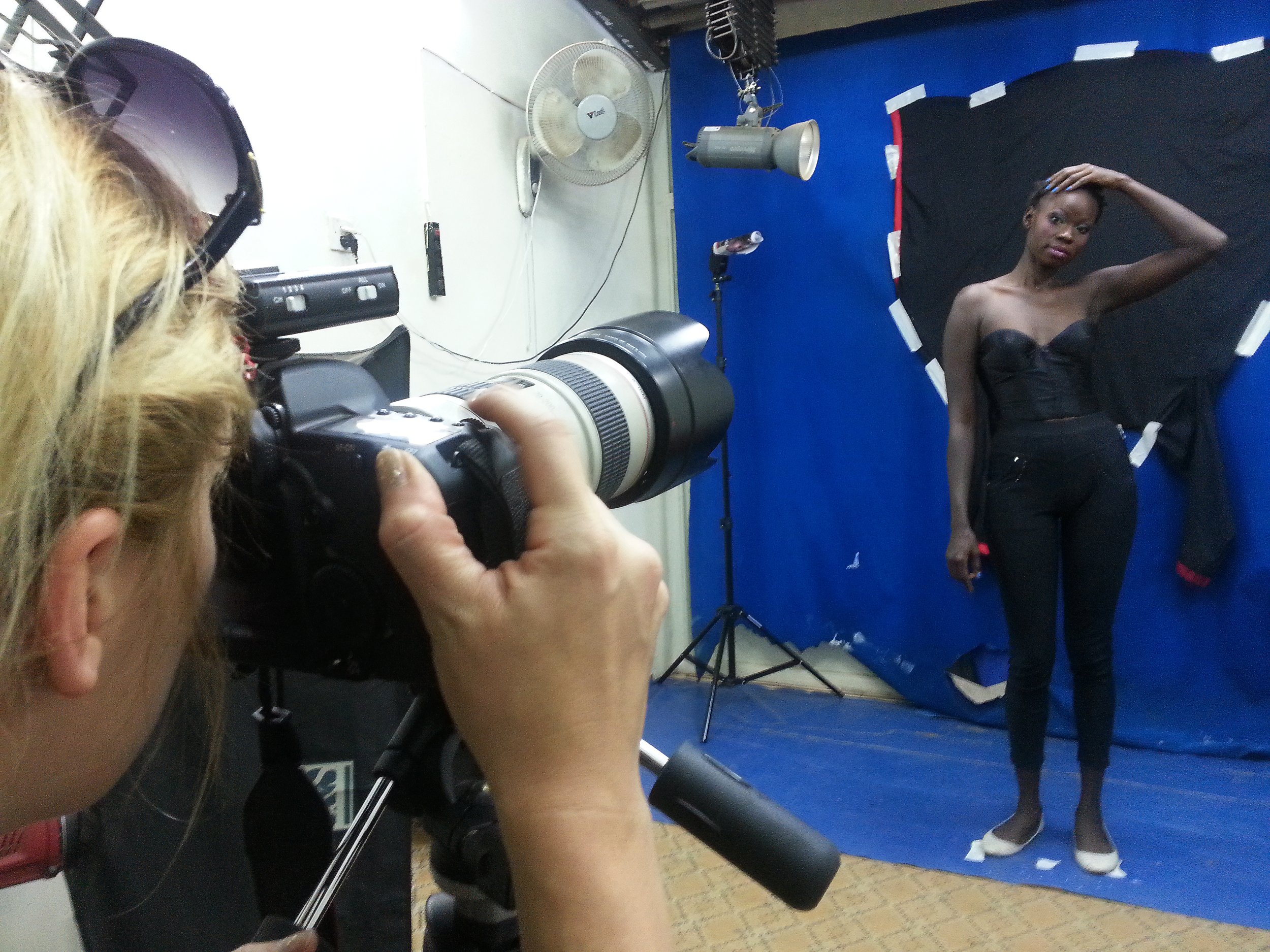
The makeshift studio
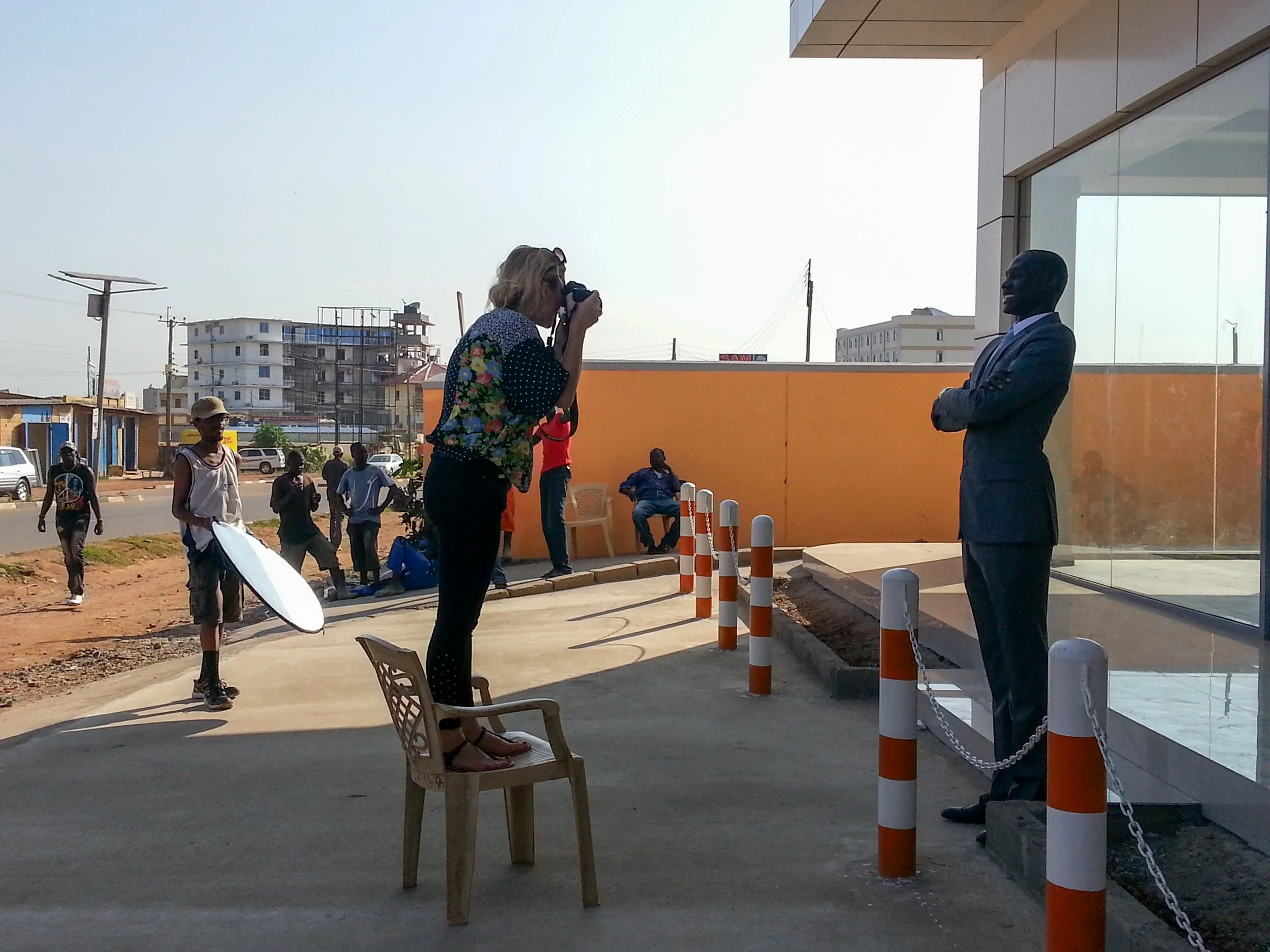
Some problems were easily fixed, like the six-foot-plus businessman model who towered over Kay. A chair was all it took to get her to eye level. The scholar in the library setup was harder. It was so hot the sweat just kept running down his face. All the fanning and blotting didn’t improve the situation, and even in editing, we were removing white fibres from his skin where bits of tissue had stuck to him. Being handed rice and curry to eat without cutlery was a different kind of experience. You just had to get stuck in with your hands, otherwise you weren’t eating anything.
We battled the heat, humidity, tropical storms, bureaucracy, language barriers and lack of infrastructure. All whilst civil unrest simmered beneath the surface.
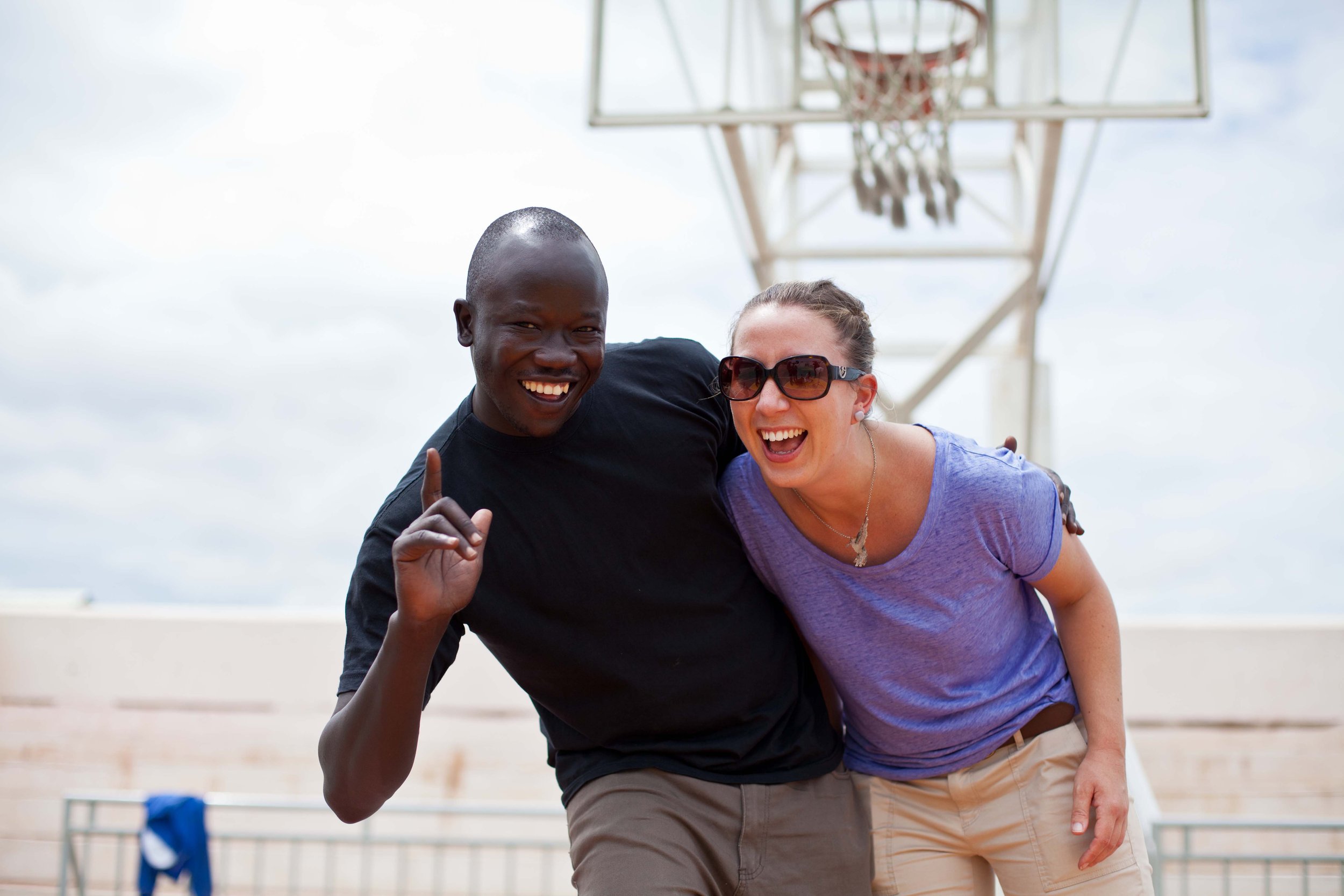
At Juba Basketball Stadium with Scopas, the Zain South Sudan client
One evening, after wrapping the late afternoon shoot, the van was blockaded by the military near Bilpam, the army headquarters. Our crew were briefly detained at gunpoint and suspected of being spies. Questioned and threatened with lashes, they were released later that night, but I didn't find out until the next morning.
No one said much. They just looked exhausted.
It was a stark reminder of the reality of the country we were working in.
One lovely memory I do have is of our local Zain client, Scopas, making a deep, throaty click in approval whenever he liked an image. I’d certainly never had feedback delivered like that before.
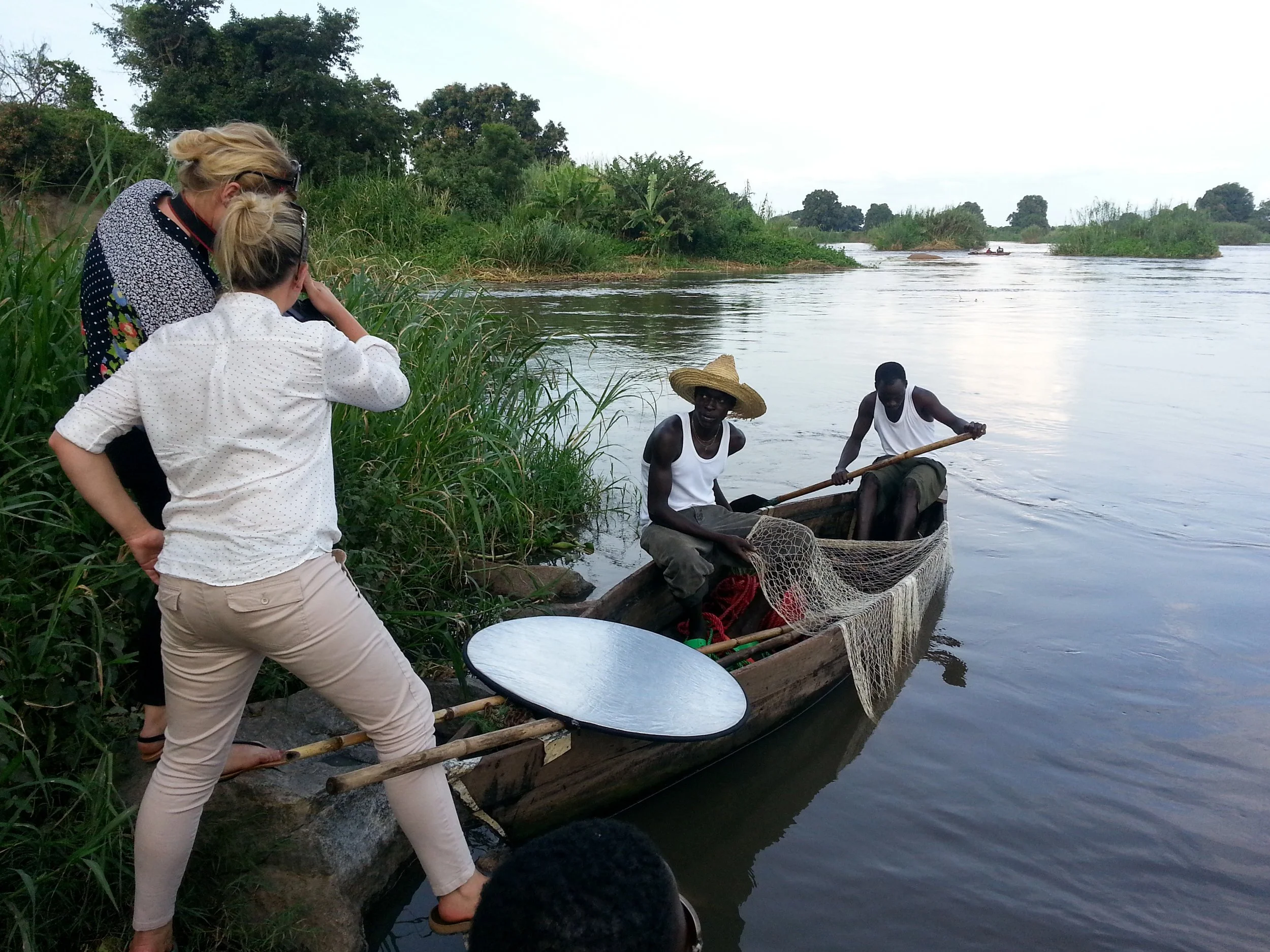
Directing on the White Nile with Kay
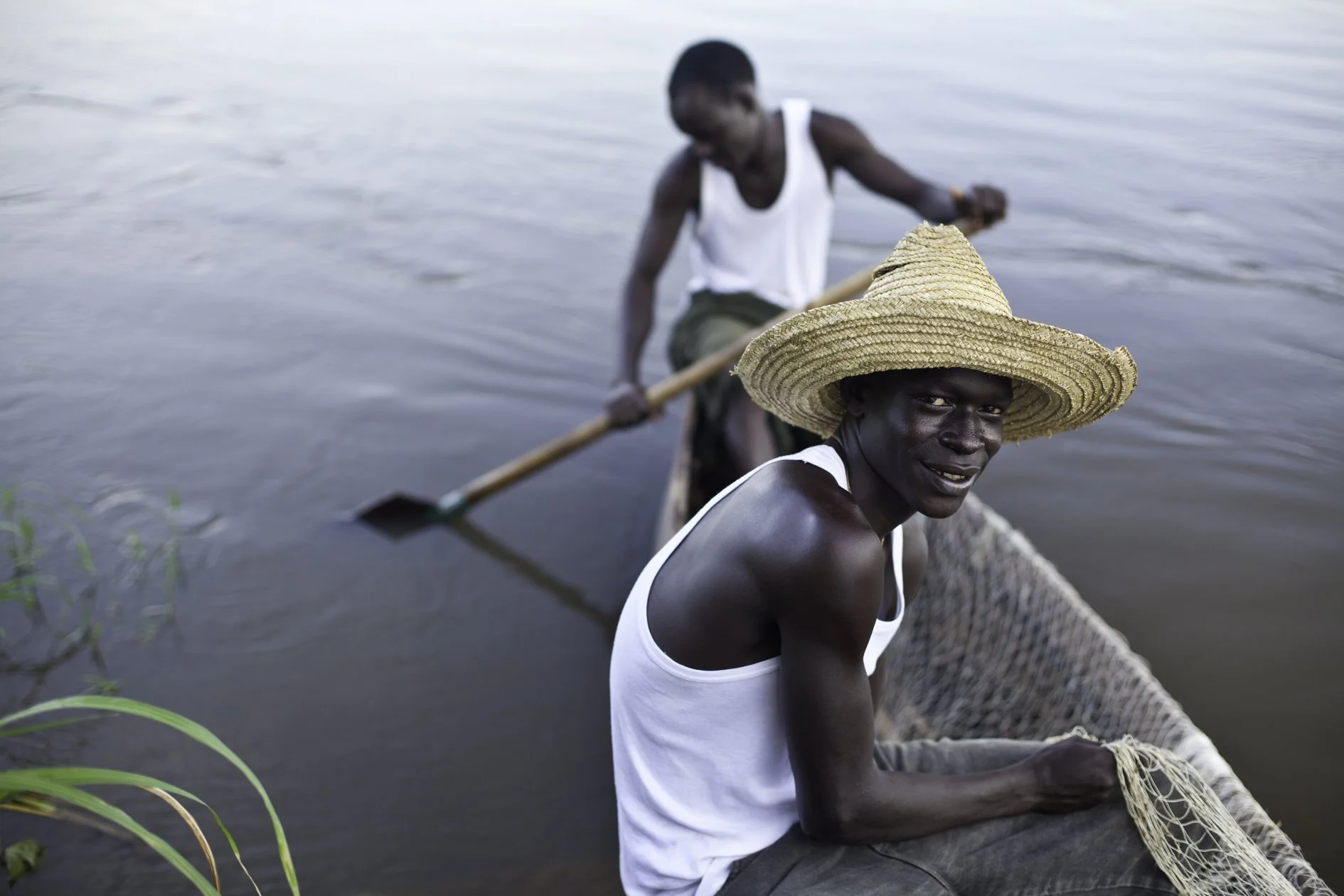
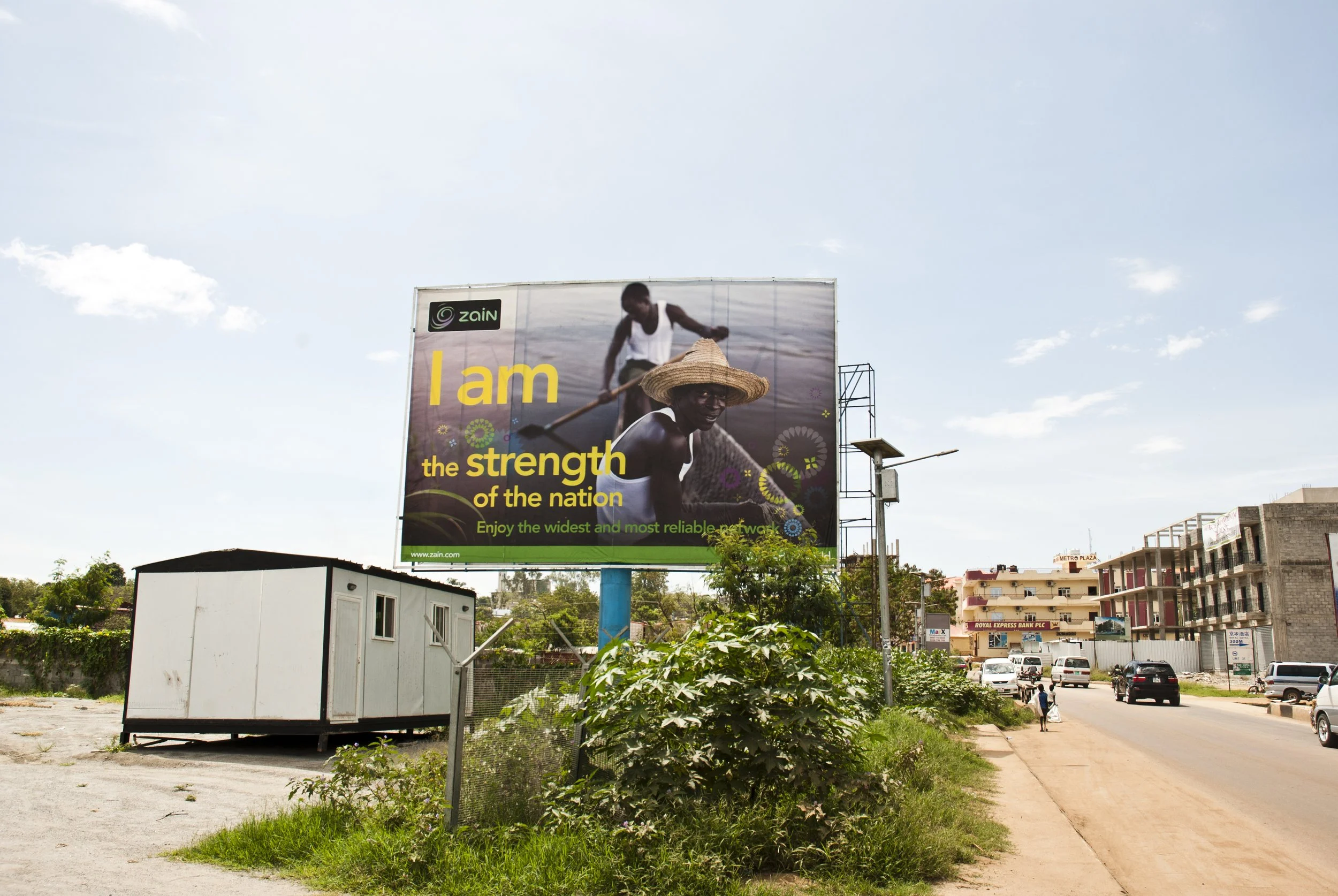
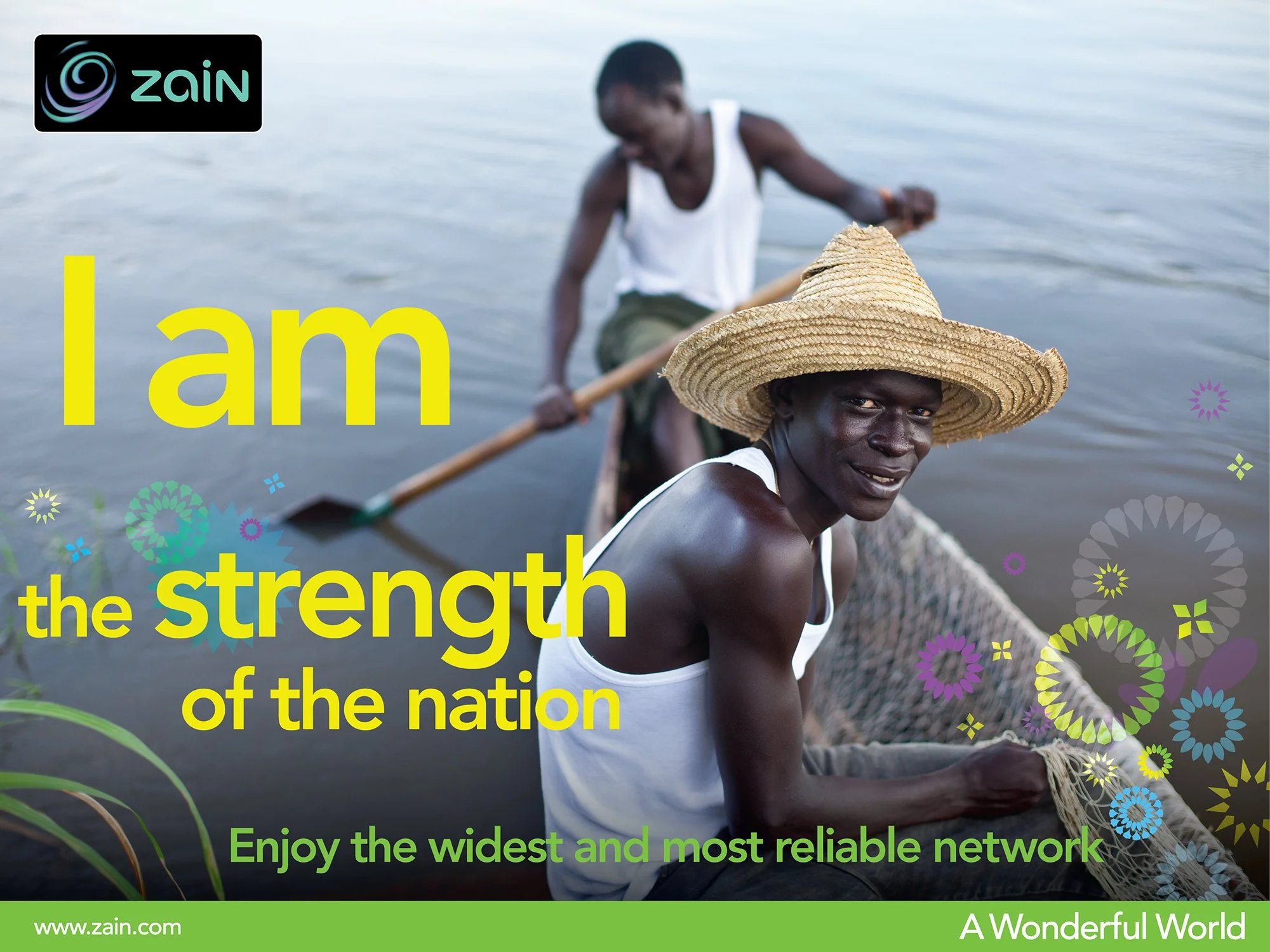
‘I am the strength of the nation’ - Photo: Kay Lockett
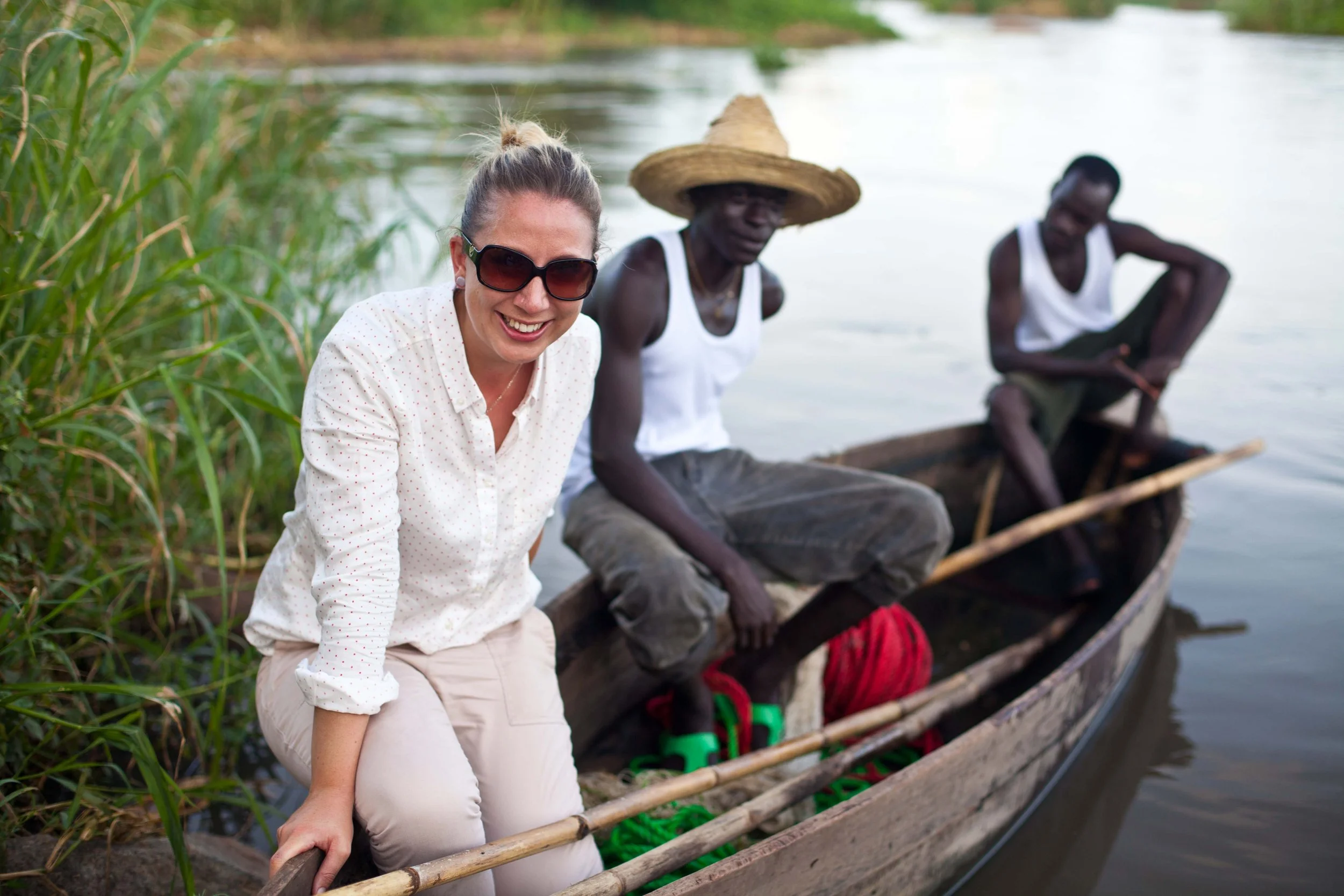
Just before wrapping on the last day, Kay and I both thought we could do better with the shot on the Nile with the fishermen. We went back just before sunset and managed to take the new photo far quicker than our three-hour shoot on the water a few days before.
We pushed hard on the first attempt, trying to direct the fishermen who had no idea what we were saying or trying to achieve. At one point, I had my shoes off and was ankle-deep in the water, trying to negotiate the boat into place against the current and arrange drenched nets. We kept at it, but ultimately, when I tested the images in the layouts, we didn’t love them.
So we went back, convinced we could do better, and as the fishermen paddled towards us, there it was, the shot, with the late afternoon sun lighting their skin. It was perfect, and we captured it quickly. It became one of my favourite images of the shoot.
The fishermen waved us off wearing their new white 'prop' vests, leaving us with fresh Nile fish, which I believe was enjoyed by our local crew. The vests had been borrowed by Winnie from her brother. They sailed off wearing them, never to be seen again.
And that was a wrap. Ten shoots, plus one reshoot, in three days, with casting and model releases on the go, in a country that was incredibly difficult to operate in.
I’m currently working on another South Sudanese project, and it has brought back a lot of memories of my experience over there. It’s for a completely different industry, but the need to adapt, rethink and find new ways to solve problems is the same.
It made me realise how much South Sudan shaped the way I approach creating for emerging markets. It taught me that branding isn't just about how something looks. It's about how it is received, understood, used and ultimately brought to life in the real world. You can't separate the creative idea from the environment it has to live in.
It is easy to design something on screen in London. But what happens when that on-trend, digital identity needs to be painted by hand on a wall, or recreated by someone who has never worked with a brand system before? You have to design for the reality on the ground.
It’s adapting for those constraints that leads to more relevant creativity. And that is the most exciting part of my job.
A note on South Sudan
The country fell into civil war not long after I left, and I watched from afar as the situation worsened. During my week there, I met some incredibly warm, resourceful and generous people, and our South Sudanese crew, Tande, Winnie and Chris, were an essential part of making the work happen.
Looking back and writing these stories down, I feel a real sense of pride in what we achieved together, despite the chaos. And I look forward to one day returning.