Why Creativity is Shaped by Life, Not a Machine
What we probably don’t need is another Creative Director weighing in with their thoughts on AI, especially when the likes of Sir John Hegarty have already said it so eloquently: AI doesn't have imagination. You do.
It’s a simple statement, but it speaks to my creative soul.
This is far from an anti-AI article. AI is brilliant for research, for stress testing concepts, even for discovering new fonts rather than scrolling font libraries endlessly. It can execute your ideas at speed and cut down the time it takes to generate content and animate creative. But the thought of handing over creative thinking? That fills me with dread.
There’s a mystery surrounding creativity that people want to decode. I’ve been asked many times how I come up with a new identity or a campaign, and whether I have a step-by-step process that, if followed, delivers a big idea. I’ve written about it before The Thinking Nobody Sees. I think AI only amplifies this formulaic belief: that creativity can be distilled by a process, and therefore a machine.
That is my fundamental issue with AI being used for creative thinking.
AI can’t replicate the creative magic. And by that, I mean the unexpected connection that comes from our own lived experiences, observations and the things we’ve absorbed throughout our lives. The thing that takes an idea somewhere you’d never think to look.
Let me explain why…
You Can’t Prompt Lived Experience
AI can scan, search and access an extraordinary amount of information, identify patterns and draw connections between things. Far quicker than a designer scrolling through Pinterest for ‘inspiration’. But access to information isn’t the same as having the experience to interpret it in an entirely unexpected way.
I feel much the same about AI being used for ideas as I do about a designer who copies a ‘found’ image. Shortcuts don’t lead to a big idea. Borrowing someone else’s thinking, or having AI find the solution for you, is a way of avoiding the creative process rather than challenging it.
I’m sure we all have our own process, but for me, creative thinking is my subconscious drawing on a lifetime of lived experience while I’m immersed in the brief I’ve been given. AI takes a prompt and draws on related information it has access to, but it doesn’t connect any of that to a memory from somewhere else entirely. That’s the unexpected leap that, when pursued, has the potential to be a great idea.
My inspiration often comes from memories and the things I love.
Watching ballet, where movement, costume and lighting are always awe-inspiring. My love of calligraphy and an appreciation of letterforms. A scrap of fabric found in my mother’s sewing room. My expat years in the Middle East and Africa. The photos in my phone of colour palettes from nature, fashion, art and a sky at sunset. The many photography trips I’ve taken across the world.
These moments might have nothing to do with the brief I’m working on. I may not even realise their significance at the time. But they leave something behind, stored somewhere in my memory until one day something connects and my thinking goes somewhere I couldn’t have planned.
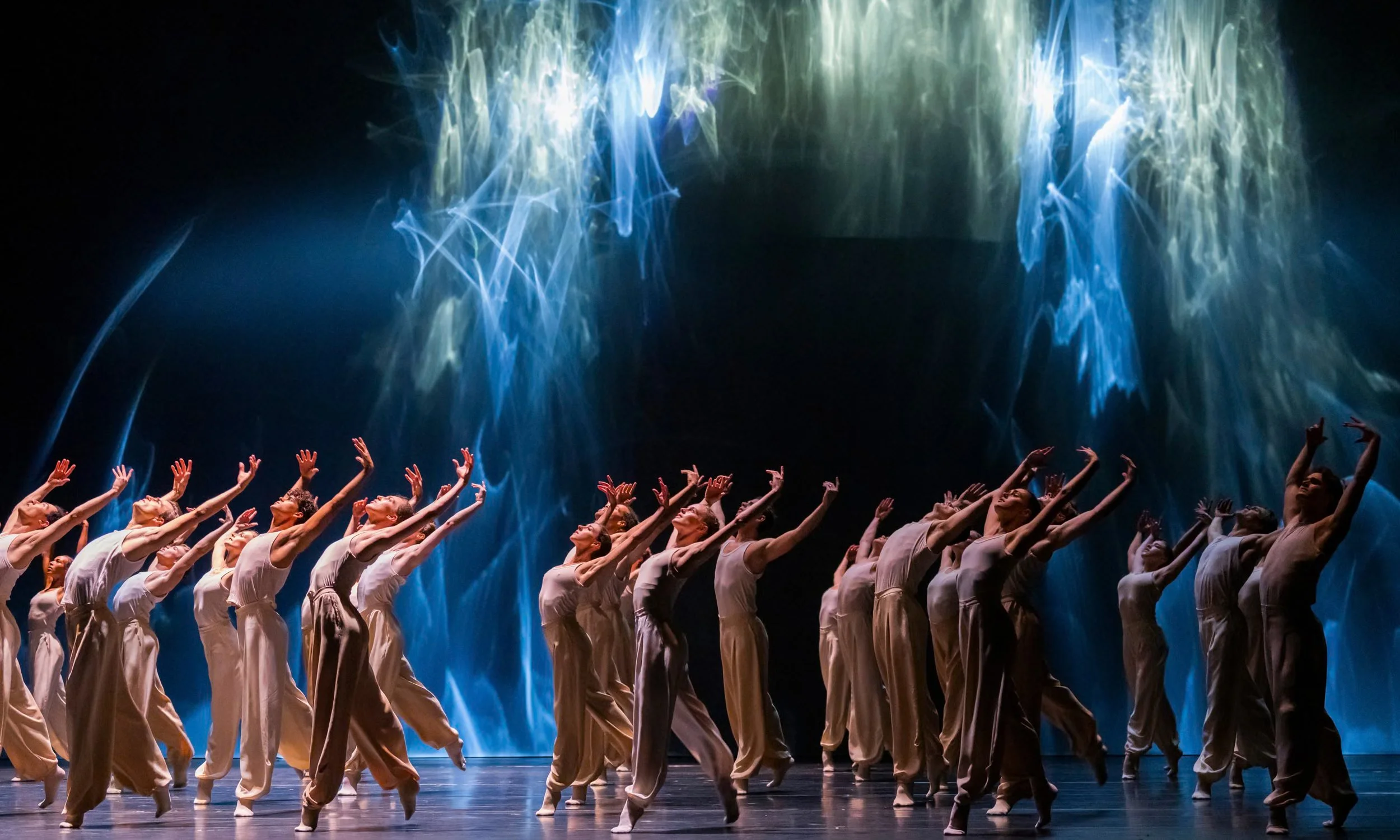
The Royal Ballet in Light Of Passage by Crystal Pite
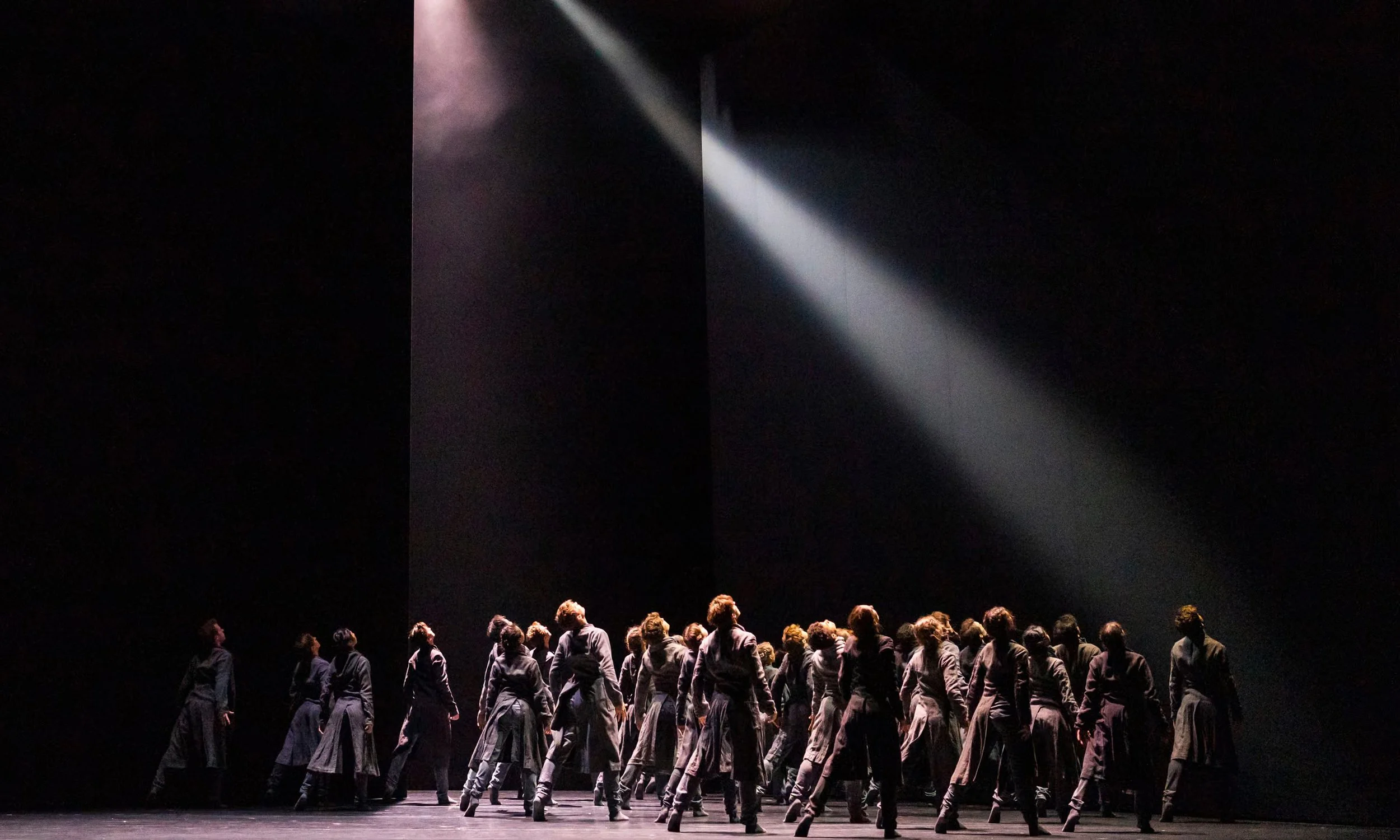
Photography: Tristram Kenton
MAKING A CONNECTION
There have been some unlikely connections over the years. I can’t always explain how my mind makes the leap from being in the depths of a brief to drawing on seemingly unrelated experiences and memories, but here are a few examples.
Take a mission-critical American AI brand with its history rooted in a NASA space mission. While exploring the concept of ‘edge of possibilities’, my mind took me to a ballet I’d watched back in 2022, Light of Passage. Not the most obvious of connections, perhaps, but the lighting design, with its colours and movement of the light across the Royal Opera House stage, ended up inspiring a brand asset within its new identity.
Then there was a project for the world’s largest social media app, where we needed to find a way to engage with Muslim women whose voices weren’t being heard on the platform. I went straight to the khanga, a cloth I loved and collected when I lived in Kenya. Printed across this fabric are messages in Swahili, allowing women to communicate with each other through what they wear. I was drawn to the idea of women talking to women without saying a word, and it became the starting point for the concept.
Another example was for Indian Independence Day. One of the Middle East’s largest telecommunications companies wanted to mark the occasion with a social post. I’d just returned from Jaipur, where I’d been during Eid, and had seen the beautiful tradition of creating colourful rangoli patterns using sand. This distinctly Indian art form seemed the perfect way to answer the brief, creating something that would resonate with Indian audiences living in the Middle East and strengthen their connection with the brand. A simple hyperlapse video of the Indian flag taking shape by hand in coloured sand achieved over 100k organic views on social media.
None of these came from a process, and none could have come from a prompt.
And that is what really bothers me about creatives using AI for creative thinking. AI is brilliant for broad research, but research has its limits. It can draw on existing ideas, references and styles, finding patterns in what has gone before. But where would a machine have found the ballet for a NASA-inspired AI brand? Or the khanga in a brief about Muslim women? Those connections came from a life lived, from travel and encounters with other cultures, from watching light fall on a dancer mid-performance. That is what adds depth to your work.
But making the connection is only the start. There’s another part of creative thinking that matters just as much: knowing why an idea is right. Understanding its significance, and having the conviction to stand behind it, is what turns an idea into something worth pursuing.

Swahili words on a Kenyan Khanga

Photography: Emilia Łapko
THE COST OF BORING
Formulaic work is boring work. Your starting point should never be the most obvious answer. If a client wanted a formulaic response, they could put their brief into a machine themselves and get a reasonable first pass. If a creative is using AI for their thinking, what is the client paying for?
Look at the enormous amount of AI-generated creative content on the internet. So much of it is bland, derivative, emotionally empty and visually predictable. It can look polished. It can imitate an aesthetic. It can even look convincing at first. Yet it feels like a synthesis of things that already exist, so inauthentic that people see straight through it.
Conclusion
Creativity is an expression of being human. It draws on everything we’ve experienced, felt, noticed, loved and remembered. All of that finds its way into the ideas we create, and ultimately into the brands we shape. Great brands don’t thrive on bland. They thrive on imagination, and for now, only a human can bring that.
So my advice to creatives? Stay curious, ask questions and don’t be afraid of a blank piece of paper. Keep feeding your imagination, and be brave enough to back your own ideas.
Because the difference between a Creative Director and AI?
Lived experience.
Well, that and a 20-year head start.